In today’s digital economy, data has become one of the most valuable assets for businesses, governments, and organizations worldwide. Every click, transaction, social interaction, and sensor reading contributes to a growing pool of information known as big data. However, managing, processing, and extracting insights from this massive volume of data is not a simple task. This is where cloud computing plays a transformative role.
Cloud computing has revolutionized how organizations handle big data by offering scalable infrastructure, flexible resources, and cost-efficient solutions. Without the cloud, modern big data analytics would be far more complex, expensive, and limited in capability. In this article, we will explore in depth how cloud computing powers modern big data solutions, its key benefits, technologies involved, real-world applications, and future trends.
Understanding Big Data and Its Challenges
Big data refers to extremely large and complex datasets that cannot be processed using traditional data processing tools. It is commonly defined by the “3 Vs”:
- Volume – Massive amounts of data generated every second
- Velocity – The speed at which data is produced and processed
- Variety – Different types of data, including structured, semi-structured, and unstructured
Over time, additional dimensions such as Veracity (data accuracy) and Value (usefulness) have also been introduced.
Key Challenges of Big Data
Organizations face several challenges when dealing with big data:
- Storage Limitations
Traditional storage systems struggle to handle petabytes or exabytes of data. - Processing Power
Analyzing large datasets requires significant computational resources. - Scalability Issues
Systems must grow as data increases, often unpredictably. - Cost Constraints
Building and maintaining infrastructure is expensive. - Data Integration
Combining data from multiple sources can be complex.
Cloud computing addresses these challenges effectively, making it a cornerstone of modern big data solutions.
What Is Cloud Computing?
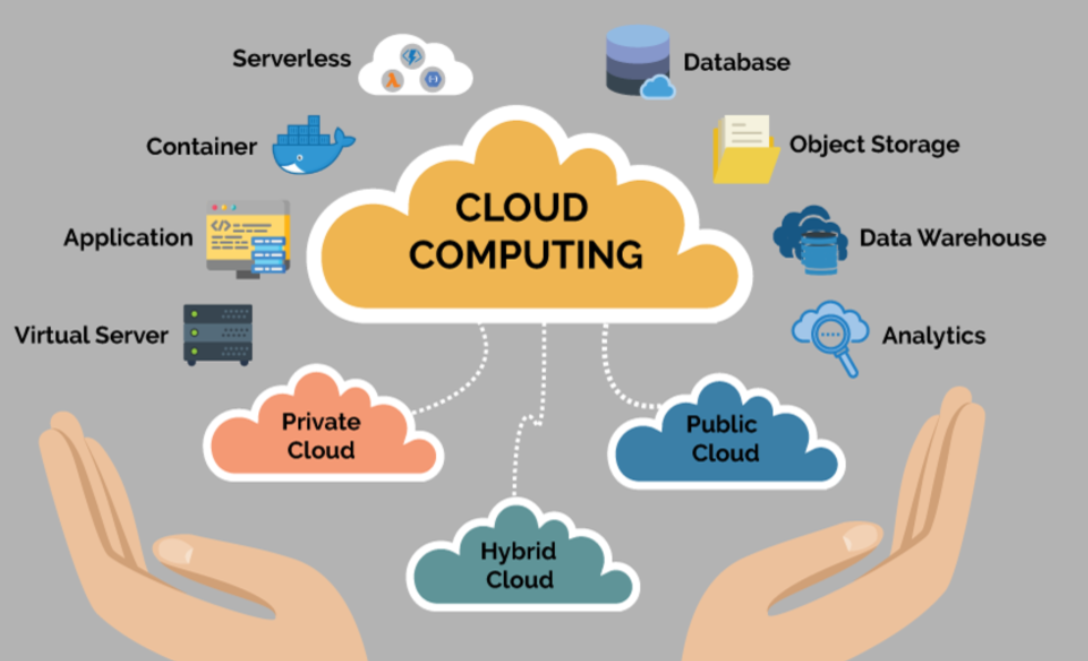
Cloud computing refers to the delivery of computing services—including servers, storage, databases, networking, software, and analytics—over the internet. Instead of owning physical hardware, organizations can rent resources on demand from cloud providers.
Types of Cloud Services
- Infrastructure as a Service (IaaS)
Provides virtual machines, storage, and networking. - Platform as a Service (PaaS)
Offers tools and platforms for application development. - Software as a Service (SaaS)
Delivers software applications via the internet.
Deployment Models
- Public Cloud – Shared resources available over the internet
- Private Cloud – Dedicated infrastructure for a single organization
- Hybrid Cloud – Combination of public and private environments
- Multi-Cloud – Use of multiple cloud providers
The Relationship Between Cloud Computing and Big Data
Cloud computing and big data are deeply interconnected. Big data requires massive infrastructure, while cloud computing provides that infrastructure in a flexible and scalable way.
Why Cloud Computing Is Essential for Big Data
- Eliminates the need for costly hardware
- Enables on-demand resource allocation
- Supports distributed computing frameworks
- Provides global accessibility
Without cloud computing, handling modern big data workloads would be impractical for most organizations.
Key Ways Cloud Computing Powers Big Data Solutions
1. Scalable Storage Solutions
One of the most significant contributions of cloud computing is scalable storage. Cloud platforms offer virtually unlimited storage capacity, allowing organizations to store massive datasets without worrying about physical limitations.
Benefits:
- Pay-as-you-go pricing
- Automatic scaling
- High durability and redundancy
Cloud storage systems can handle structured databases, unstructured files, and real-time data streams efficiently.
2. High-Performance Data Processing
Big data analytics requires processing large datasets quickly. Cloud computing enables distributed processing using clusters of virtual machines.
Technologies Used:
- Distributed computing frameworks
- Parallel processing systems
- In-memory computing
This allows organizations to analyze terabytes of data in minutes instead of hours or days.
3. Cost Efficiency
Traditional big data infrastructure requires significant upfront investment in hardware, maintenance, and staffing. Cloud computing eliminates these costs by offering:
- Subscription-based pricing
- No hardware maintenance
- Reduced operational expenses
Organizations only pay for the resources they use, making big data solutions accessible even to small businesses.
4. Elastic Scalability
One of the most powerful features of cloud computing is elasticity—the ability to scale resources up or down based on demand.
Example:
- During peak usage, additional servers can be deployed instantly
- During low demand, resources can be reduced to save costs
This flexibility is crucial for handling fluctuating data workloads.
5. Real-Time Data Processing
Modern applications require real-time insights, such as fraud detection, recommendation systems, and IoT analytics.
Cloud computing supports real-time data processing by providing:
- Stream processing tools
- Low-latency data pipelines
- Event-driven architectures
This enables organizations to make faster and more informed decisions.
6. Advanced Analytics and Machine Learning
Cloud platforms offer built-in tools for advanced analytics, including:
- Machine learning models
- Artificial intelligence algorithms
- Data visualization tools
These capabilities allow businesses to extract meaningful insights from big data without building complex systems from scratch.
7. Data Integration and Management
Big data often comes from multiple sources, including:
- Social media
- Sensors and IoT devices
- Business applications
Cloud computing provides tools for:
- Data ingestion
- Data transformation
- Data warehousing
This simplifies the process of integrating and managing diverse datasets.
8. Enhanced Security and Compliance
Security is a major concern when dealing with big data. Cloud providers implement advanced security measures such as:
- Data encryption
- Identity and access management
- Threat detection systems
They also comply with international standards, ensuring data protection and regulatory compliance.
9. Global Accessibility
Cloud computing allows users to access data and analytics tools from anywhere in the world.
Advantages:
- Remote collaboration
- Multi-region deployment
- Reduced latency for global users
This is especially important for multinational organizations.
Popular Cloud-Based Big Data Technologies
Several technologies have emerged to support big data in the cloud:
1. Distributed Storage Systems
These systems store data across multiple servers to ensure reliability and scalability.
2. Data Warehousing Solutions
Cloud-based data warehouses enable fast querying and analytics.
3. Data Lakes
A centralized repository for storing raw data in its native format.
4. Stream Processing Tools
Used for processing real-time data streams.
5. Containerization and Orchestration
Technologies that simplify deployment and scaling of applications.
Real-World Applications of Cloud-Powered Big Data
1. Healthcare
- Predictive analytics for disease prevention
- Personalized treatment plans
- Medical imaging analysis
Cloud-based big data solutions help healthcare providers improve patient outcomes.
2. E-Commerce
- Recommendation engines
- Customer behavior analysis
- Inventory optimization
Companies use big data to enhance user experience and increase sales.
3. Finance
- Fraud detection
- Risk management
- Algorithmic trading
Real-time data processing is crucial in financial markets.
4. Transportation and Logistics
- Route optimization
- Fleet management
- Traffic prediction
Cloud computing enables efficient transportation systems.
5. Smart Cities
- Energy management
- Waste optimization
- Public safety monitoring
Big data helps cities become more efficient and sustainable.
Advantages of Using Cloud for Big Data
1. Flexibility
Organizations can choose the tools and services that best fit their needs.
2. Speed
Cloud platforms enable faster deployment and processing.
3. Innovation
Access to advanced technologies fosters innovation.
4. Reliability
High availability and disaster recovery features ensure data safety.
5. Collaboration
Teams can work together seamlessly across locations.
Challenges of Cloud-Based Big Data Solutions
Despite its advantages, cloud computing also presents some challenges:
1. Data Privacy Concerns
Sensitive data stored in the cloud must be protected.
2. Vendor Lock-In
Switching providers can be difficult.
3. Data Transfer Costs
Moving large datasets can be expensive.
4. Complexity
Managing cloud-based systems requires expertise.
Organizations must carefully plan and implement strategies to overcome these challenges.
Best Practices for Implementing Cloud-Based Big Data Solutions
To maximize the benefits of cloud computing, organizations should follow these best practices:
1. Define Clear Objectives
Understand what you want to achieve with big data.
2. Choose the Right Cloud Model
Select between public, private, or hybrid cloud based on your needs.
3. Optimize Data Storage
Use appropriate storage solutions for different types of data.
4. Implement Strong Security Measures
Protect data with encryption and access controls.
5. Monitor Performance
Continuously track system performance and optimize resources.
6. Train Your Team
Ensure staff have the necessary skills to manage cloud technologies.
Future Trends in Cloud and Big Data
The integration of cloud computing and big data continues to evolve. Some key trends include:
1. Edge Computing
Processing data closer to the source to reduce latency.
2. Serverless Architecture
Running applications without managing servers.
3. AI-Driven Analytics
Using artificial intelligence to automate data analysis.
4. Multi-Cloud Strategies
Using multiple cloud providers for flexibility and reliability.
5. Quantum Computing
Potential to revolutionize data processing capabilities.
Conclusion
Cloud computing has become the backbone of modern big data solutions. It provides the scalability, flexibility, and power needed to handle massive datasets and complex analytics. By eliminating infrastructure limitations and enabling advanced technologies, the cloud allows organizations to unlock the full potential of their data.
As data continues to grow in volume and importance, the role of cloud computing will only become more critical. Businesses that leverage cloud-powered big data solutions will gain a competitive advantage, make better decisions, and drive innovation in an increasingly data-driven world.